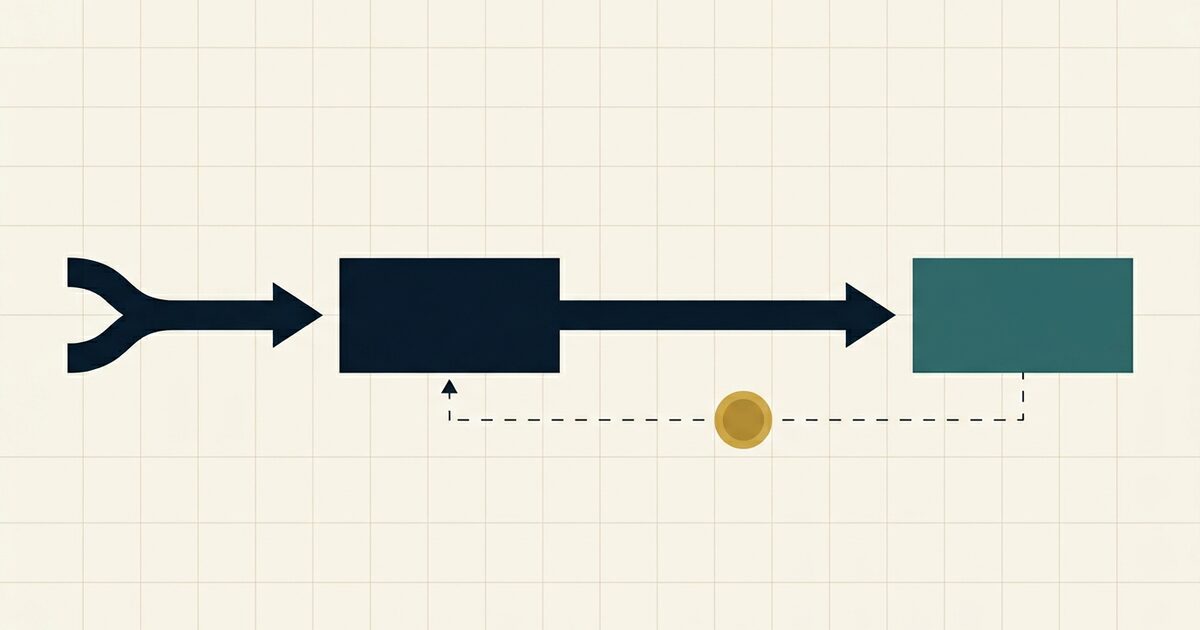
Payment for order flow, abbreviated as PFOF, is the practice by which a broker that accepts a retail customer's buy or sell order routes that order to a third-party trading venue (typically a market maker or systematic internaliser) and receives a small payment from that venue in return. The payment, usually a fraction of a basis point of the trade value, is the source of revenue that allows several large European and US neo-brokers to advertise zero or near-zero per-trade commissions to their customers.
The European Union has now banned the practice. Regulation (EU) 2024/791 of 28 February 2024, which amends the Markets in Financial Instruments Regulation (MiFIR), inserts a new Article 39a that prohibits investment firms acting on behalf of retail clients from receiving any fee, commission or non-monetary benefit from any third party for executing those clients' orders on a particular trading venue. Member states that already had brokers using PFOF as of the regulation's entry into force were given an option to allow the practice to continue within their own jurisdiction during a transitional period that ends on 30 June 2026.
This is a substantive change to the economics of European retail brokerage. This piece explains what PFOF is, what the regulation does and does not require, and what the practical implications are for retail investors in the EU and the EEA.
What PFOF actually is, in mechanical terms
When a retail customer places a market order to buy 100 shares of a listed stock, the broker has a choice of where to route that order. The traditional choice would be the regulated exchange where the stock is primarily listed (for example, Xetra for a German DAX constituent, the London Stock Exchange for a UK FTSE constituent). An alternative choice is to route the order to a market maker or systematic internaliser, a regulated firm that runs its own internal order book, fills the customer's order against its own inventory, and pays the broker a small fee for sending the order in the first place.
From the broker's perspective, PFOF is a revenue stream that scales with order volume. A broker that accepts $10 billion of customer orders per year, and receives PFOF averaging 0.4 basis points (a representative figure cited in ESMA's 2021 Statement on payment for order flow), generates $4 million of annual revenue. For a low-cost neo-broker with millions of small accounts, this is large enough to fund the offering of zero-commission trading.
From the customer's perspective, PFOF is invisible. The customer sees a zero or low commission on the trade confirmation. What the customer does not see is the spread between the price they actually paid and the best price available across all execution venues at the moment of the trade. The PFOF regime creates a structural conflict of interest: the broker has a financial incentive to route the order to the venue that pays the highest PFOF, which is not necessarily the venue offering the best price.
The case for and against PFOF
Defenders of PFOF, including the SEC under chair Gary Gensler's predecessor and several US market makers, argue that it permits zero-commission retail trading that is genuinely cheaper for customers than the alternative of paying explicit commissions on every trade. They cite analysis showing that retail orders routed to market makers via PFOF arrangements typically receive "price improvement," meaning execution at a price slightly better than the National Best Bid and Offer (NBBO) at the moment of the order.
Critics, including the European Securities and Markets Authority and several European regulators, argue that the price improvement claim is correct on a literal basis but misleading. The relevant comparison is not "execution at NBBO versus execution slightly better than NBBO" but "the spread that would be available if all orders, including retail orders, were exposed to a transparent, central order book versus the spread that exists when retail order flow is systematically siphoned away from public venues." On the latter comparison, the academic and regulatory evidence is less favourable to PFOF.
The European response, captured in the explanatory recitals to Regulation 2024/791, is that the conflict of interest inherent in PFOF is incompatible with the MiFID II best execution obligation, and that the retail-investor benefit is not large enough to justify the structural distortion of the market. The recitals are explicit: PFOF "may distort the routing of orders" and "is not in line with the obligation of investment firms to act in the best interest of their clients."
What the regulation does and does not do
Regulation 2024/791 entered into force on 28 March 2024. The substantive PFOF prohibition, in Article 39a of MiFIR as amended, applies from that date for member states that did not have authorised firms using PFOF before the regulation's entry into force.
For member states that did have such firms (notably Germany, where Trade Republic and Scalable Capital operate as the largest neo-brokers, and Ireland), the regulation gives those member states the option to authorise existing PFOF arrangements to continue within their own jurisdiction until 30 June 2026. After that date, no PFOF is permitted anywhere in the EU for orders received from retail clients located in any member state.
The German financial regulator BaFin and the German parliament have confirmed they will use the transitional provision, and Trade Republic, Scalable and the other affected German brokers will be required to restructure their revenue model by mid-2026. Both Trade Republic and Scalable have publicly stated that they will not be passing the lost PFOF revenue through to customers as new explicit commissions, and have signalled changes to their fee schedules including the introduction of subscription tiers and order-related fees on certain transaction types.
The regulation does not affect:
- Orders from professional clients (the prohibition applies only to orders received from retail clients).
- Spread-based revenue earned by market makers themselves (a market maker that quotes a bid and an ask, and earns the spread, is not affected by the PFOF rule unless it is also paying brokers for routing).
- Securities lending fees, foreign exchange spreads, or other broker revenue streams that do not involve a third party paying the broker for order routing.
The US regulatory divergence
The United States has not banned PFOF. The SEC, under chair Gensler in 2022 to 2024, considered a series of reforms targeting retail order routing (the so-called "Equity Market Structure Proposals," including the Order Competition Rule), but the most aggressive of those proposals were not adopted. As of 2026, US retail brokers including Robinhood, Charles Schwab and E*TRADE continue to accept PFOF on equity and options orders.
This means that as of mid-2026 there will be a clean regulatory divergence between the EU and the US on PFOF, with the EU prohibiting it for retail and the US permitting it. The implications for European customers of US-headquartered brokers depend on which legal entity the customer holds an account with: a customer of Interactive Brokers UK or Interactive Brokers Ireland, for example, sits under EU/UK rules even though the broker's parent is US. A direct US account holder (which is rare for European residents) sits under US rules.
What this means for you, in practice
The most likely consequences for European retail investors over the next two years are:
- European neo-brokers will introduce explicit fees on at least some trade types. Trade Republic and Scalable have begun this transition with order fees on certain venues and instrument categories, and the trajectory is toward more, not less, explicit pricing.
- Subscription tiers will become more common. The "free trading" model is harder to sustain when the principal source of trade revenue has been removed, and subscription-based access to lower trading fees is the obvious commercial response.
- Best execution disclosures will become more meaningful. With the structural conflict of interest removed, the broker's actual order-routing decisions will be visible in the venue mix without the PFOF distortion. The order execution policy document, which we discussed in our recent piece on MiFID II best execution, becomes more straightforward to read.
- Routing competition will shift toward execution quality. Brokers that compete on the genuine quality of their execution (price improvement on a like-for-like basis, fill rates, settlement reliability) will have a fairer playing field than they did under the PFOF regime.
For an individual investor, the practical advice is to read whatever fee-schedule update the broker sends in the next twelve months carefully. The broker has been giving you "free" trading subsidised by a hidden revenue stream. When the hidden revenue stream is removed, the cost has to come from somewhere, and the broker's communication about exactly where will be the most informative thing they have published in years.